Knit Bucket Hat Wholesale: How to Source Custom Logo Knit Hats from a Reliable Factory
The knit bucket hat has transitioned from a niche accessory to a mainstream must-have, making it one of the most reliable revenue generators in the headwear category. For retailers, brands, and promotional product distributors, sourcing custom logo knit hats from a dependable factory is the difference between a best-selling collection and a logistical headache. This guide walks you through the critical steps of sourcing, customization, and quality control to ensure your wholesale investment pays off.
1. Why Knit Bucket Hats Are a Wholesale Best-Seller
Seasonal Demand and Year-Round Appeal
Unlike rigid summer caps, the knit bucket hat offers a unique versatility that spans seasons. Chunky knit versions dominate fall and winter inventories, while lighter cotton-blend styles transition seamlessly into spring. This extended selling window allows wholesalers to maintain steady inventory turnover rather than being locked into a single-season product. The tactile, cozy aesthetic also aligns perfectly with the ongoing “gorpcore” and outdoor-lifestyle trends, ensuring consistent consumer demand.
Popular Use Cases for Custom Logo Knit Hats
The applications for custom logo knit hats are remarkably diverse. Outdoor brands use them to complement technical fleece lines, while streetwear labels leverage the slouchy silhouette for urban drops. Music festivals and events order them as premium merch giveaways. Additionally, corporate wellness programs and winter trade shows have adopted them as practical branded gifts that recipients actually use—making them a high-retention promotional item.
2. Essential Specifications for Custom Logo Knit Hats
Material Options: Acrylic, Wool, Cotton Blends
Your material selection dictates both cost and comfort. Acrylic is the most budget-friendly option, offering excellent color retention and machine-washability, which makes it ideal for promotional orders. Merino wool provides premium warmth and natural moisture-wicking but carries a higher price point and requires careful care instructions. Cotton blends offer a middle ground, providing breathability for transitional weather. For custom logo knit hats, always request a fiber content breakdown from your supplier to verify claimed blends.
Sizing and Fit for Different Demographics
Standard knit bucket hats typically come in one-size-fits-most (approximately 58–60 cm circumference), but this does not suit every market. Women’s-specific sizing often requires a slightly shallower crown, while children’s lines need scaling down significantly. When sourcing wholesale, specify your target demographic clearly. A reliable factory will have size charts for adult unisex, women’s slim-fit, and youth options, and will adjust the knitting pattern accordingly without distorting the bucket shape.
Color Customization and Pantone Matching
Color consistency is a major pain point in textile sourcing. To ensure your brand colors remain accurate across your knit bucket hat lineup, always require Pantone (or a physical color swatch) matching. Note that knitted yarn does not reproduce printed Pantone colors perfectly; the texture and stitch density affect how light reflects off the fibers. Advanced factories will knit small color swatches first for your approval rather than relying on visual estimates.
3. Comparing Knit Bucket Hat Styles and Materials
Chunky Knit vs. Fine Knit: Aesthetic and Durability Differences
Chunky knit bucket hats feature oversized yarns and visible, tactile stitches that create a bold, fashion-forward statement. However, this bulkier construction is more prone to snagging and can stretch out of shape over time. Fine knit hats, in contrast, use smaller gauge needles and tighter stitching. While they offer a more subtle, elegant texture, the trade-off is a denser material that holds its structural shape better and resists pilling—provided the yarn quality is adequate.
Choosing the Right Yarn Weight for Your Brand
Yarn weight classification (from super bulky to light fingering) directly impacts the production method. Super bulky yarns are typically hand-knit or flat-knitted, limiting mass production speed and increasing labor costs. For wholesale scales, a medium or worsted-weight yarn is the industry sweet spot: it knits efficiently on circular machines, maintains a substantial hand-feel, and allows for detailed jacquard or intarsia logo patterns. For a detailed technical reference on yarn weights, let your logo complexity guide the yarn weight choice.
4. How to Source a Reliable Knit Bucket Hat Factory
Factory Audit Checklist: Quality Control and Certifications
Do not choose a supplier based solely on price. Before committing, request certifications such as BSCI (Business Social Compliance Initiative) or ISO 9001. A thorough factory audit should verify machinery maintenance records, inspect knitting waste management, and confirm that no child labor is involved in the supply chain. If you cannot visit in person, hire an independent third-party inspection agency in the country of origin to conduct a surprise audit—this reveals more than a scheduled tour. A reliable factory will have proper quality control and transparent processes.
Requesting Samples and Evaluating Craftsmanship
A pre-production sample is non-negotiable. When evaluating the sample, do not just look at the logo. Examine the seam stitching at the crown, the finish of the brim edge, and the elasticity of the ribbing. A high-quality knit hat should have an even stitch density across the entire crown, no loose yarn tails internally, and a brim that snaps back after being folded but does not permanently crease. Test the sample by washing it twice to check for shrinkage or color bleeding.
Communication and Lead Time Expectations
Transparent communication is a hallmark of a trustworthy factory. A professional supplier will respond to technical queries within 24 hours and provide clear production milestone dates. Beware of factories that give vague answers about raw material sourcing. Standard lead times for custom logo knit hats are 30 to 45 days for production, excluding shipping. If a factory promises ridiculous turnaround times (e.g., 10 days) during peak season, they are likely sacrificing your quality standards.
5. Best Practices for Custom Logo Implementation
Embroidery: Classic and Durable
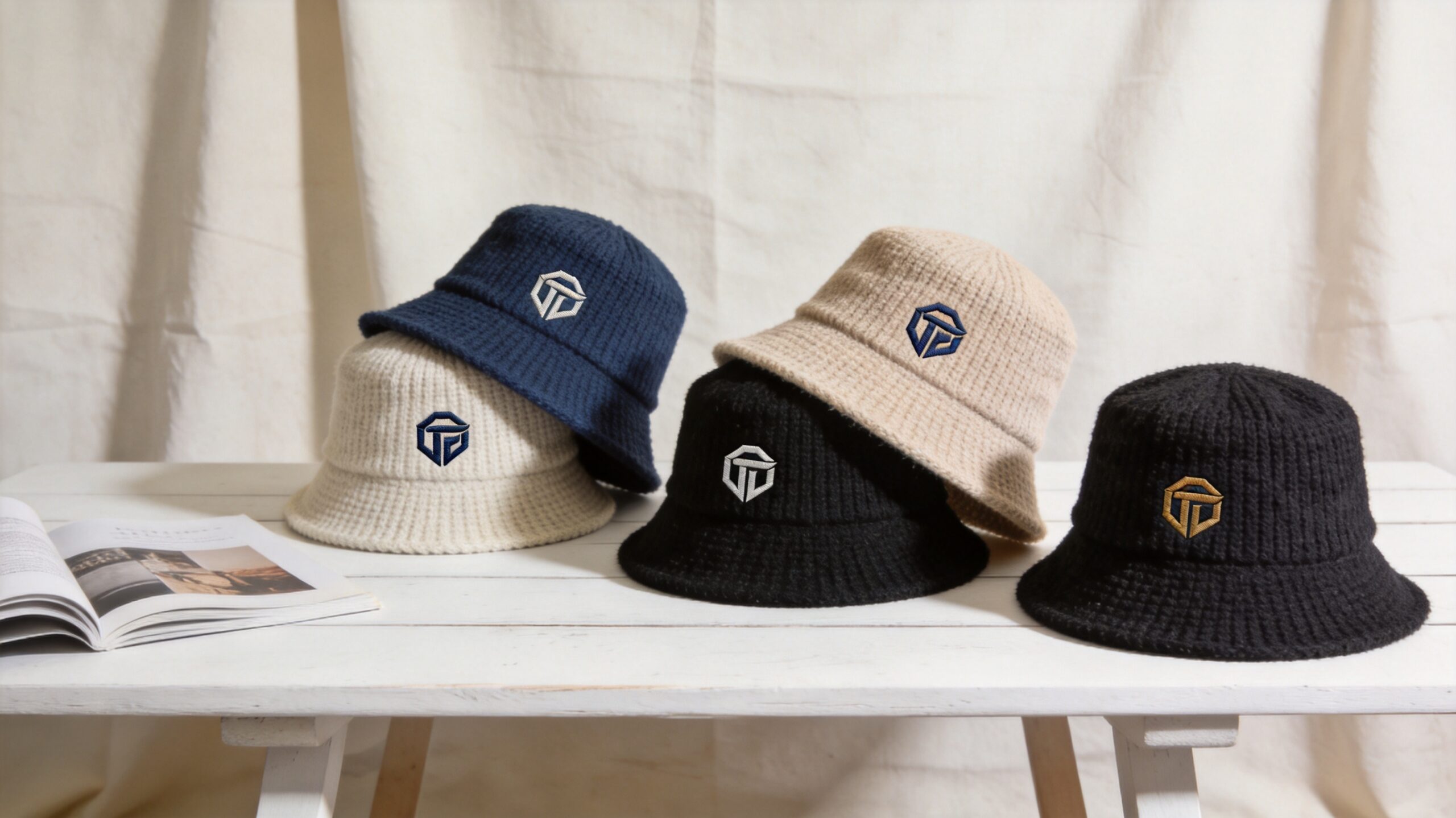
Embroidery remains the most popular method for custom logo knit hats because of its durability. However, thick, chunky knit fabric can swallow standard embroidery thread. For best results, use a stabilizer backing that prevents the stitches from disappearing into the yarn. Opt for a high-density embroidery pattern on the front panel or a flat patch sewn onto the side—this preserves the pattern integrity without distorting the knit structure.
Woven Labels and Patches
Woven labels are an excellent alternative for intricate, multi-colored logos that would become a thread-plug nightmare with embroidery. A woven label can be tacked onto the side of the bucket hat, offering a vintage or heritage aesthetic. For a premium finish, consider leather patches (leatherette for vegan lines) attached with visible stitching—a trend that pairs exceptionally well with chunky wool styles.
Knit-In Logos for a Seamless Look
For the highest perceived value, request a jacquard or intarsia knit-in logo. This technique weaves the thread directly into the fabric during the knitting process, creating a seamless, luxurious finish where the logo feels like part of the hat itself. This method works best with bold, simple graphics and block lettering. It increases production time and cost, but the end result justifies the premium price point for flagship retail lines.
6. Minimum Order Quantities and Wholesale Pricing
Understanding MOQ Ranges for Knit Hat Production
The knit bucket hat’s MOQ varies drastically based on the knitting machine type. Flat knitting machines, used for complex patterns, typically require fewer units per color, often starting at 200–300 pieces. Circular knitting machines, which produce the basic blank hat body rapidly, may require a MOQ of 500–1000 pieces per colorway. If you are testing a new market, ask the factory about “stock color” programs where you can order lower quantities but with limited color options.
Bulk Pricing Tiers and Cost per Unit
Wholesale costs scale directly with yarn weight, fiber composition, and logo complexity. As a baseline, an acrylic chunky knit hat with a basic woven label typically lands between $2.50 and $4.50 per unit in quantities of 1,000. Upgrading to a 100% wool blend with a knit-in logo can push the cost to $8–$12 per unit. Always request a tiered quote (e.g., 500, 1,000, 5,000 units) to visualize your margin at different order volumes.
Shipping and Import Fees for International Sourcing
The total landed cost—not the factory ex-works price—determines your profitability. For shipments from Asia to North America or Europe, budget for ocean freight (approximately 30–45 days) or air freight (7–10 days but 3-5x more expensive). Additionally, account for import duties, which average 10–15% for textiles in many jurisdictions, plus broker fees and inland trucking from the port. Request the factory to quote in FOB (Free on Board) terms so you understand exactly where their responsibility ends and yours begins.
7. Frequently Asked Questions About Knit Bucket Hat Wholesale
What is the typical lead time for custom knit hats?
Including yarn procurement, knitting, logo application, and final inspection, expect 45–60 days total for a full production run. Adding 15–30 days for international shipping gives you a total lead time of 60–90 days from order confirmation to your warehouse.
Can I get a sample before placing a large order?
Yes, reputable factories always provide pre-production samples. Most charge a nominal sample fee (often $30–$80) plus shipping, but deduct this amount from your bulk order invoice upon confirmation. Always insist on a “salesman sample” that reflects the exact yarn and logo specifications.
How do I ensure logo color consistency?
Provide your required Pantone references and request a physical yarn card or dyed yarn swatch before full production. Also, specify the thread brand (e.g., Madeira, Sulky) for embroidery options. In your contract with the factory, include a clause allowing a tolerance of just 1.5 to 2.0 on the Delta-E color scale, ensuring a match clearly visible to the human eye.
—
Sourcing custom logo knit hats at wholesale is a strategic investment that rewards careful planning. By defining your materials, understanding knitting and logo techniques, and demanding rigorous factory standards, you eliminate the risk of costly errors. The demand for this tactile, stylish accessory remains high— partnering with the right reliable factory ensures your brand captures maximum market share without compromising on quality or your bottom line.