
Acrylic Knit Hats: Request the Pilling Record
For an acrylic knit-hat pilling-record RFQ, ask whether the manufacturer provides an applicable report or record for the actual offered style and material version. Request the report identifier, issuer, date and sample relationship, retaining the method, conditions and result exactly within their stated scope. A catalogue fibre declaration or a hat photograph does not establish pilling resistance or the availability of a report.
A buyer comparing knit-hat offers may receive a general material description while needing a product-specific document reference. A focused report-applicability request makes the supplier question clear. It connects any record actually provided to the proposed style, sample and quotation without treating a broad material name as evidence of a tested result.
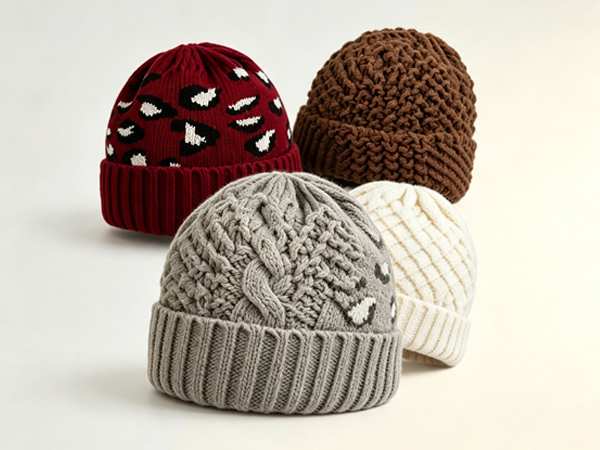
Separate knit-hat category group. Identify each offered style with the manufacturer; the grouped hats do not establish one SKU, an offered mixed pack or tested fabric performance.
Identify the actual style and material version
Start with the manufacturer product reference used in the quotation. For the Double-layered cap catalogue reference, retain the supplier material declaration as its own statement and ask which actual style and material version the manufacturer is offering. The listed acrylic wording is not independent verification of fibre content.
The official category group above shows several different knit-hat patterns. It provides appearance context, rather than identifying a shared tested product or material version. Ask the manufacturer to connect any offered record to the selected style instead of assigning a report across a group of hats because they appear together in the catalogue.
Ask whether an applicable record is provided
Request a clear manufacturer response on whether it provides a pilling report or record applicable to the identified offer. If a record is proposed, ask for its identifier and the document itself or the actual supplier reference provided. If no applicable record is offered, retain that answer rather than completing the purchasing file with an assumed result.
Keep the buyer document request separate from the supplier confirmed response. A catalogue product listing does not guarantee that a report exists or can be supplied. Where the manufacturer proposes another record, ask what it covers and keep that scope distinct from the report originally requested.
Buying field
Requested supplier response
Offer identity
Actual manufacturer style and material version in the quotation.
Report identity
Identifier and version of the record actually proposed.
Issuer and date
Issuing party and date stated in the supplied record.
Sample relationship
Sample identity and its relationship to the offered product.
Method reference
Actual method description or reference stated by the record.
Condition scope
Conditions and limitations as stated, retained with the result.
Result reference
Reported result preserved within the document stated scope.
Quotation applicability
Manufacturer explanation connecting the record to the current offer.
Knit-hat category display. Colours and rows are presentation references, not a confirmed assortment, quantity allocation, fibre declaration or pilling result for a quoted style.
Map the record to the actual sample
Ask the manufacturer to identify the sample represented in the report and explain its relationship to the offered hat. Retain the sample reference beside the style and material-version information. If the report sample represents another proposal, request clarification before treating it as applicable to the current quotation.
The cable-pattern hat display above is a separate category composition. Its colours and rows do not establish the sample tested in a report or a common material declaration. Keep any sample relationship specific to the manufacturer actual record, rather than using a general appearance display as a substitute for that relationship.
Retain the stated method, conditions and result together
Where a report is provided, keep its stated method or reference, conditions and result in the same purchasing record. Ask the supplier to clarify an abbreviated or unclear field by referring to the actual document. Do not replace an undefined field with a method, standard or condition selected from a general product description.
Retain the report result within the document stated scope and any limitations it provides. A report reference should not be expanded into a general anti-pilling claim for every style or future material version. This inquiry requests the manufacturer applicable record; it does not prescribe a test procedure, invent a score or establish certification.
Actual Double-layered cap gallery reference. The manufacturer lists acrylic as its material declaration; the image does not verify fibre content, available colour allocations or a pilling report.
Connect the document to the current quotation
Ask the manufacturer whether the identified record applies to the actual style and material version now quoted. Retain its applicability explanation with the quotation and any associated sample reference. If the proposal differs from the report sample, record the difference and the supplier response rather than assuming that the document covers the change.
The Double-layered cap product-gallery reference above belongs to the actual catalogue item used in the inquiry. Its appearance and supplier acrylic declaration do not verify a pilling report or establish a tested result. Use the manufacturer product identity to connect the document question to the actual offer.
Preserve a clear applicability and revision record
Before relying on a supplier-provided record, compare the report identifier, sample identity and style or material version across the document, response and quotation. Keep any unresolved field visible. If the manufacturer supplies a replacement report or revises its applicability statement, retain the new reference and its relationship to the earlier response.
For a repeat order, refer to the earlier document and ask whether it remains applicable to the product version now offered. A clear historical reference can support the discussion, while the supplier still needs to identify the actual current proposal. This preserves an evidence-based purchasing file without assuming fibre verification, a performance level or an unchanged test result for a different material version.
Buyer FAQ
Does an acrylic declaration establish pilling resistance?
No. Ask whether the manufacturer provides an applicable product-specific record and retain its actual scope.
What should identify the requested report?
Keep the report identifier, issuer, date and sample relationship with the document.
Can a record be assigned to every hat in a catalogue group?
Request the manufacturer applicability statement for the actual offered style and material version.
What if no applicable record is proposed?
Retain that supplier response instead of inventing a result or report availability.
Use the Double-layered cap catalogue reference, keep other knit-hat category appearances under their own product identities and request the applicable document through the manufacturer contact page.
Identify the actual offered style and material version.
Request the manufacturer applicable pilling record, if provided.
Retain its stated result and limitations with the sample and quotation relationship.
acrylic knit hat pilling record applicabilityB2B supplier sample record