
Knit Hat Orders: Define the Colour Allocation
For a wholesale knit-hat order, define the proposed colour allocation as a supplier-confirmed commercial record for each actual offered style. Identify the variant, quantity field, selling unit and applicable quotation version on every line. A display of several coloured hats does not establish which colours are offered, how they may be combined or what quantity the manufacturer proposes to supply.
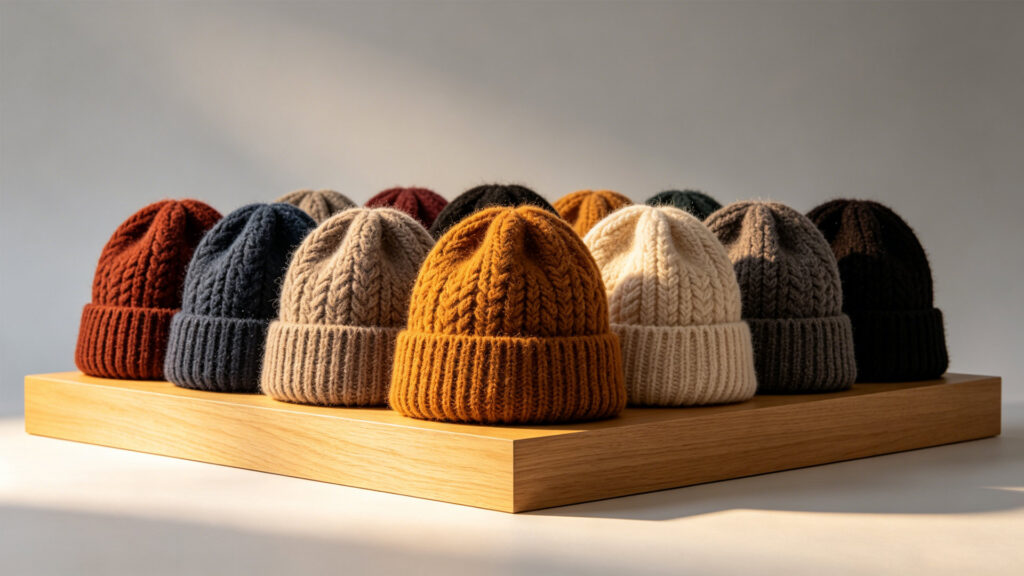
Knit-hat category display. Colours and rows are presentation references, not a confirmed assortment, quantity allocation, fibre declaration or pilling result for a quoted style.
Choose the offered style before allocating colours
Yingteng’s Double-layered cap is an identified product reference for a manufacturer enquiry. The website also presents cable-pattern and other knit-hat appearances in category groups. Keep the selected manufacturer product name or style reference on the allocation request. Hats pictured together can introduce the range without establishing that they belong to one style or one proposed sales pack.
Ask the manufacturer to identify the actual variants it proposes for the selected style. Retain its colour names, codes or other identifiers as supplied. If a picture includes another patterned or differently constructed hat, give that product its own line where it is part of the enquiry. A commercial allocation should distinguish the offered items before the buyer considers their proposed quantities.
Give each proposed colour an identifiable line
Use a separate row for each manufacturer-identified colour variant included in the proposal. Keep the product reference and colour identifier together so another buyer can understand the allocation without relying on the row’s position in a photograph. Where a manufacturer uses a shared name for different variants, ask how it distinguishes the actual offered item in its commercial reply.
Separate a buyer’s requested allocation from the supplier’s confirmed proposal. The enquiry may contain desired variants that the manufacturer has not offered. Keep the response status visible beside those rows. A clear record can show a proposed option, an alternative and an unanswered request without treating every item on the buyer’s list as available stock or an accepted order line.
Separate knit-hat category group. Identify each offered style with the manufacturer; the grouped hats do not establish one SKU, an offered mixed pack or tested fabric performance.
Keep the quantity object and selling unit explicit
Ask the manufacturer what object each quantity field counts for the proposed line. A finished hat, a supplier-defined pack and another commercial unit require their own clear descriptions where used. Keep the actual selling unit with the quantity entry. A shared total becomes difficult to interpret when different rows refer to different objects or when a pack description is left undefined.
Where the supplier quotes a pack, ask what actual contents its stated quantity covers and how those contents relate to the identified colour variant. Do not infer a pack quantity or a mixed-colour offer from the grouped catalogue image. Request the manufacturer’s actual proposed unit relationship before comparing rows or treating a displayed group as the quantity basis for the order.
Buying field
Requested supplier response
Style reference
Actual manufacturer product or offered style identity.
Colour variant
Supplier-provided name, code or other distinguishing reference.
Request status
Buyer request, manufacturer proposal, alternative or unresolved entry.
Quantity and unit
Actual proposed quantity with its counted object and selling unit.
Line correspondence
Applicable quotation line and manufacturer response.
Revision reference
Current allocation version and the proposal it changes.
Reconcile the proposal within the same unit basis
Ask the manufacturer to make the proposed line quantities and the stated total understandable on the same commercial basis. Keep any supplier-defined relationship between a pack and its contents alongside the allocation. The purpose is to see which actual offered variants the proposal contains, rather than to estimate quantities from a product image or create an assumed standard assortment.
If a quantity relationship is unclear, return that specific question to the supplier before accepting the allocation record. Preserve the manufacturer’s explanation with the affected rows. A catalogue packing-dimensions field does not provide the colour split or the number of hats in a sales unit. Keep physical packing measurements separately identified from this commercial allocation decision.
Record alternatives and revisions deliberately
When the manufacturer proposes another colour or changes a line, ask it to identify the affected style and variant. Retain the actual revised proposal rather than replacing an identifier informally in the buyer’s internal list. An alternative should remain associated with the supplier’s response and the quotation version that contains it until the buying team has recorded its decision.
Where a proposed allocation is revised, keep the version or correspondence reference and identify which earlier proposal it replaces. Confirm whether unchanged rows remain part of the current proposal. This gives the purchasing team a practical way to distinguish the latest commercial colour split from an earlier enquiry without assuming that a pictured colour, stock position or mixing option remains available.
Actual Double-layered cap gallery reference. The manufacturer lists acrylic as its material declaration; the image does not verify fibre content, available colour allocations or a pilling report.
Use samples and photographs for identification
A manufacturer-identified sample or colour reference can help link a commercial variant to the supplier’s product record. Keep that reference beside the corresponding allocation row where provided. The allocation document describes which offered variants and quantities the proposal covers. A separate appearance-approval record can retain any physical colour matching questions without turning this commercial table into a visual matching result.
The category scenes show several knit-hat colours and patterns, while the Double-layered cap gallery gives a separate product reference. They do not establish a fixed colour ratio, a mixed-style pack or a current offer for every pictured hat. Finish the allocation enquiry with the manufacturer’s actual line-by-line response, leaving quantities, availability and unresolved variant references in their stated commercial scope.
Buyer FAQ
Does a group of coloured hats establish an offered assortment?
No. Ask the manufacturer which actual style and colour variants it proposes, then retain the quantities and selling units in its commercial reply.
What should accompany every colour-allocation quantity?
Keep the offered style, colour identifier, counted object, selling unit and applicable quotation line with the quantity entry.
Can the packing-dimensions field supply the colour ratio?
No. Request the actual commercial allocation and any proposed pack contents from the manufacturer. Packing dimensions describe a different field.
How should an alternative colour be handled?
Record the manufacturer’s identified alternative and current proposal version, with the affected line and the buyer’s decision where made.
Use the Double-layered cap product reference, identify other knit-hat styles separately, and request the actual manufacturer colour-allocation proposal.
Identify the actual offered style and colour variants.
Keep each proposed quantity with its counted object and selling unit.
Retain the current manufacturer proposal and revision reference.
knit hat commercial colour allocation recordB2B supplier sample record