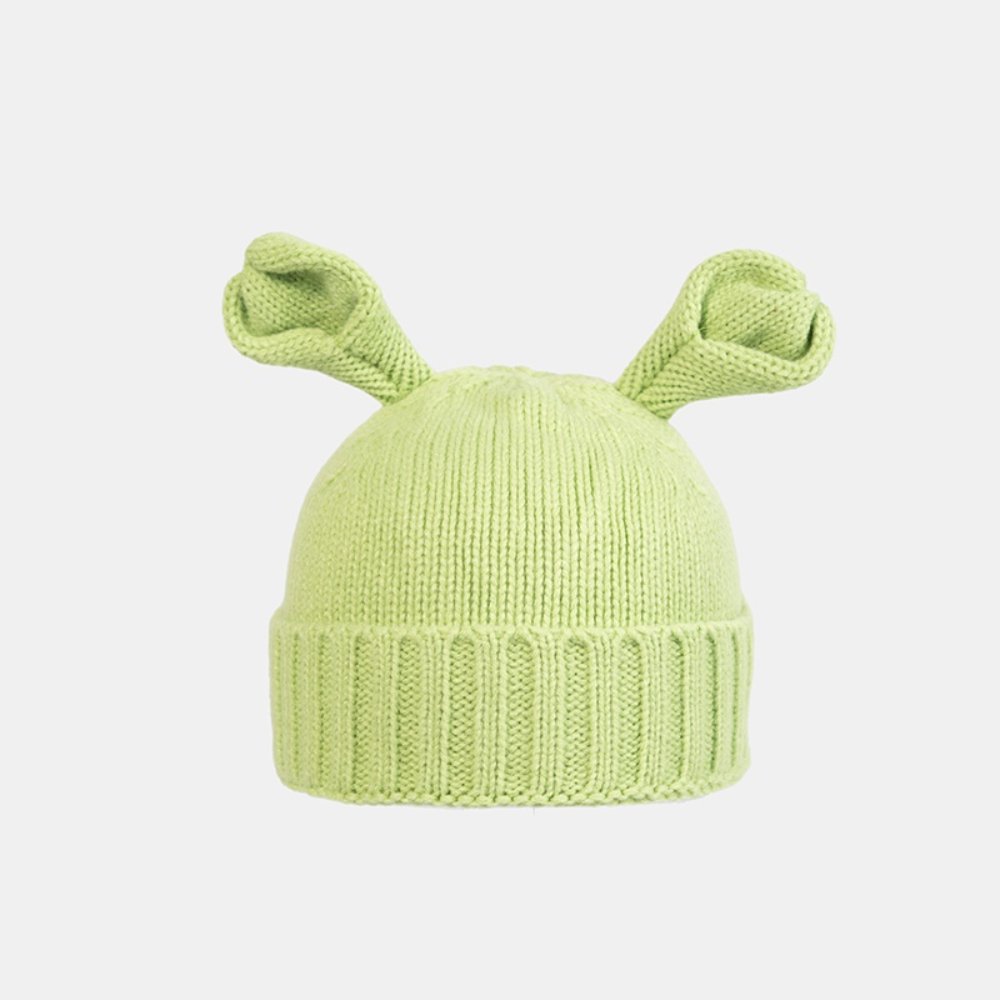
For a Funny Ears Hat sample request, identify the complete hat appearance before approving the small details. Yingteng’s gallery shows two ear-like projections above the crown, a folded ribbed cuff and several colour presentations. Send the product link with a selected image, then request an identified sample photographed from agreed views. Keep the ear shape, cuff presentation and chosen colour on one reference sheet so that “ears hat” does not become an open-ended style description.Official light-green appearance reference for the named Funny Ears Hat, showing the whole cap and its two upper details.Use the named product as the anchorThe Funny Ears Hat listing gives the buyer a specific starting point in the wholesale knit hats catalogue. The visible design combines a rounded hat body, folded cuff and two shaped projections. Use the supplier’s product title beside the selected photograph. If your team calls it an animal-style hat internally, keep that working name separate from the supplier’s style reference.A whole-product reference is more useful than a cropped image of one ear. It shows how the upper details relate to the crown and cuff. For the initial enquiry, attach the full image and add a second marked copy only if you need to point out a particular feature. This keeps the selected style visible while giving the supplier a precise question.Create a visual response sheetUse this Funny Ears Hat sample appearance approval table to organise the response. The supplier can confirm what its offered sample represents, while the buying team records which parts it wants compared. These are reference fields, not a new construction specification.Reference field | What to show | Supplier responseWhole hat | Selected official gallery image | Identify the offered sample and current versionTwo upper details | Visible shape and their relation to the crown | Return clear front and side referencesFolded cuff | Presentation used in the chosen reference | Show the sample with the cuff condition identifiedColour selection | Chosen image or buyer reference | Confirm the offered colour identificationAdd a response date and keep the image filenames on the sheet. A supplier’s front photograph and a buyer’s selected gallery view should remain distinguishable. Mark the chosen response clearly so a colleague cannot mistake a second proposal for the approved appearance.Record the viewing and presentation conditionsOfficial cream appearance reference from the same product gallery, kept as a separate colour presentation.For a two ear knit hat visual reference enquiry, ask for front, rear and side pictures of the same identified sample. Request a view showing the cuff in the intended presentation. If the supplier supports or arranges the ears for the photograph, ask it to explain that condition. A useful comparison record tells the reviewer how the item was presented instead of relying on the camera angle alone.If a particular ear dimension or placement matters to your selection, ask the supplier to mark the relevant endpoints on a photograph or sketch. Leave the value open for its response. This is more precise than inventing an ear height from a screen image, and it keeps any requested dimension attached to the feature the buyer actually means.Keep colour proposals separateThe gallery contains a light-green presentation, a cream presentation and a board with additional coloured hats. Treat the board as a visual roster for discussion. Select the appearance you want and ask how the supplier identifies that colour in its current offer. The board alone does not establish available quantities, fixed colour names or a compulsory mixed assortment.Official colour presentation board for the Funny Ears style; current colour offers and sample identities belong in the supplier’s response.Where colour matching matters, identify the physical reference your buying team wants compared with the sample. Keep that request beside the visual style sheet. Material and performance statements should remain separate: the page lists 100% Acrylic, but photographs do not establish fibre content, ear attachment strength, warmth, stretch recovery or a wearer fit range. This article uses them to identify appearance.Make the approval decision easy to traceA ready-to-send request is: “Please provide an identified sample of the linked Funny Ears Hat matching our selected appearance. Return photographs of that sample from front, rear and side views, showing the cuff presentation and both ear-like details. Please identify the offered colour and explain any difference from our attached reference.” Add your requested sample quantity and any specific measurement questions.• Give the selected full-hat image its own reference name.• Keep every returned view connected to the same sample identity.• List a changed ear shape, cuff presentation or colour as a separate proposal.• Record the chosen proposal and date on the sample sheet.Send the knit hat cuff and ear appearance record through Yingteng’s contact page. Other designs in the hat catalogue should have their own style sheets.Frequently asked questionsWhat is the best first image to attach?Use a complete official view of the selected Funny Ears Hat, with its crown, two upper details and cuff visible.Should I name a particular animal character?Use the supplier’s Funny Ears Hat title and a visual reference. This guide does not assign a licensed character identity.How can I request a precise ear shape?Mark the feature on a reference copy and ask for matching sample views and any necessary dimension definitions.What if the offered sample looks different?Keep the difference as a separate proposal and record whether your team accepts it before updating the selected reference.Product and contact referenceshttps://ytknitwear.com/product/funny-ears-hat/https://ytknitwear.com/contact/https://ytknitwear.com/products/
Get a Free Quote
Fill in the form and we'll get back to you within 24 hours.
✅
Thank you!
We've received your inquiry and will reply within 24 hours.