
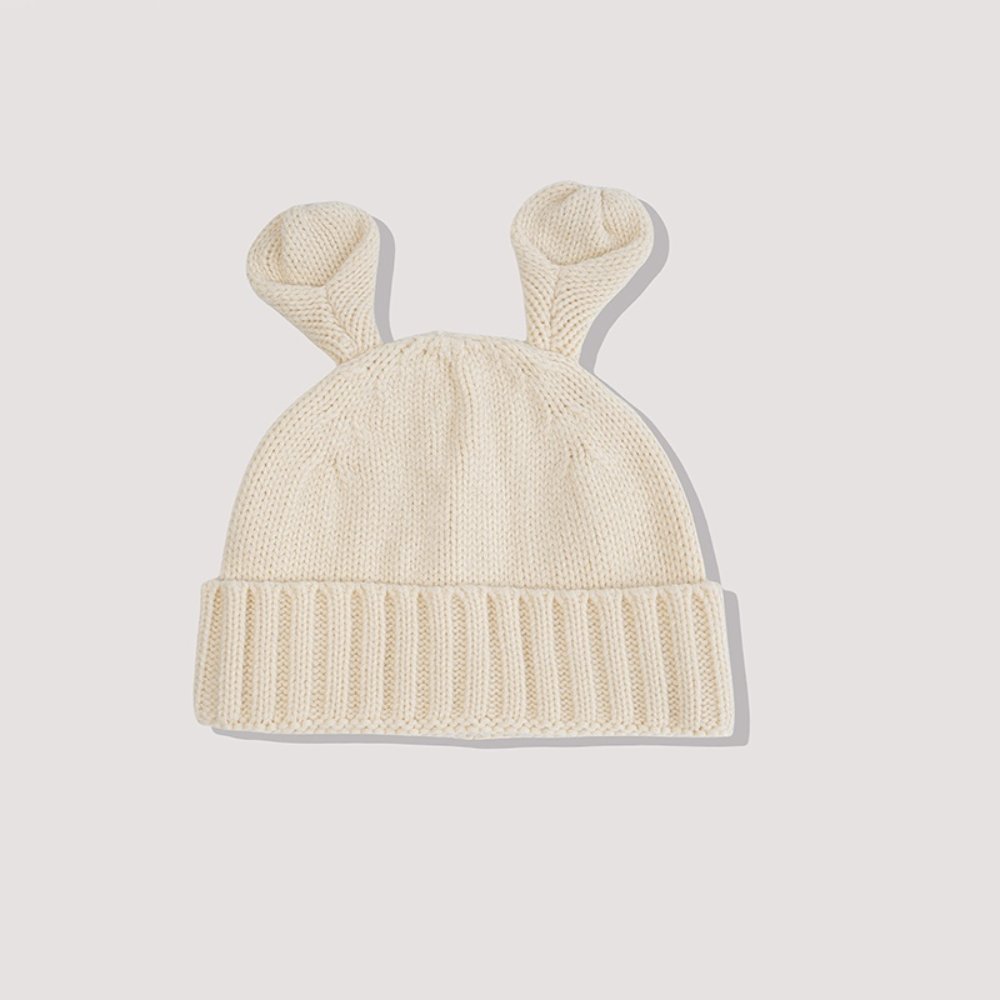
Funny Ears Hats: Define the Ear Attachment
For wholesale knit hats with projecting ear-shaped details, an appearance photograph does not define how those details connect to the hat. The Funny Ears Hat gallery identifies the finished style, but a buyer preparing a construction enquiry needs a supplier explanation of the actual ear components and their connection to the crown. Keep that question separate from approving a colour or a front-view appearance.
Yingteng lists the Funny Ears Hat within its knit-hat catalogue. The official product text declares acrylic and includes packaging and weight fields. Those are supplier catalogue statements; they do not identify whether the upper details are integral with the hat body, formed separately or joined by a particular method. Ask for the construction reference applicable to the actual offered style.
Official finished-hat identification reference. Ask the supplier to explain how the upper details connect to the hat; the photograph does not reveal a hidden joining method or strength.
Identify the assembly question before naming a method
Send the supplier the actual product-page reference and an identified offered sample or quotation. Mark the base region of each ear-shaped detail on a copy of the official image if that helps locate the question. Keep an unmarked complete-hat view alongside it so the supplier can identify the correct style rather than interpreting an isolated crop.
Ask the supplier to state whether the ear-shaped details are part of the main hat structure or separately made components connected to it. Leave the answer open. A finished exterior view cannot establish a hidden seam, a separate knitted piece, an internal support or an adhesive. Naming one of those methods in the RFQ as an established fact would go beyond the reviewed source.
Request a supplier component and connection reference
Ask for the supplier reference that explains the proposed assembly. Depending on what the supplier can provide, this might be an annotated sketch, a component description or identified photographs of the applicable construction. Confirm what the reference represents and link it to the offered item. The buyer does not need to invent a production drawing to obtain a clear supplier response.
Where a separate component is identified, ask which part of it connects to which region of the hat body. If the supplier describes an integral construction, ask how that description applies to the visible base and shaped upper region. These are component-identity and connection-scope questions. They do not prescribe a technique or imply that the detail can be removed by a user.
The same distinction applies to material information. The catalogue declaration concerns the named finished style, but it does not map a hidden connecting component or reinforcement. Ask the supplier to identify any separate component it describes rather than assigning a material to it from appearance. Keep an unanswered component field open instead of assuming the general declaration resolves it.
Buying field
Requested supplier response
Finished style
Actual Funny Ears Hat offer and the supplier sample or quotation reference.
Ear-part identity
Integral structure or separately connected component, as declared by the supplier.
Connection region
The relevant ear base and hat-body area identified in the supplier reference.
Construction document
Applicable annotated sketch, component description or identified photographs.
Component scope
Separate parts or materials the supplier actually identifies; unanswered items retained.
Change record
Construction version, supplier confirmation and affected changes requiring a new review.
Official alternate finished-hat reference. Confirm the applicable component and attachment drawing for the offered style rather than inferring integral construction from appearance.
Distinguish a connection explanation from a strength claim
A supplier description of an attachment does not by itself establish a strength result, durability claim or wearer-safety assessment. This enquiry asks how the offered detail is incorporated into the hat. If the buyer also needs performance evidence, define that as a separate requirement with an agreed scope and an appropriate supplier response.
Do not turn a photograph of a raised ear into proof that it holds its shape during use or after packing. Likewise, an identified joining location does not establish a numerical force limit. No such product result is supplied by the reviewed catalogue. Record what the supplier has actually explained and avoid adding an unstated test, threshold or guarantee to the construction sheet.
If a supplier offers a demonstration or supporting report, ask which sample and construction version it concerns and what question it answers. Keep the evidence and its stated limits with that requirement. A construction explanation, a visual appearance record and a performance report may all be useful, but they remain different kinds of information.
Review the proposed sample against the construction response
An identified sample can help the parties locate the areas discussed in the supplier reference. Ask the supplier which exterior views or other appropriate information it can provide to explain the construction. Do not instruct a buyer or retail user to dismantle the hat simply because a hidden area remains unanswered. Refer that question back to the manufacturer.
Record whether the response applies to both ear-shaped details and to the complete offered version. If different components or connection regions are proposed, ask the supplier to distinguish them. The aim is to remove ambiguity in the offered assembly, rather than to assume that two similar visible shapes prove identical hidden construction.
Where the explanation differs from the initial buyer assumption, retain the supplier response and update the open question. An appearance reference can still identify the desired finished style while a construction proposal remains under discussion. Approval of the silhouette or cuff presentation should not silently approve an unexplained connecting component.
Official catalogue presentation for the same named style. Colour proposals and ear attachment construction require separate supplier confirmation; the board does not prove identical hidden assembly.
Keep the construction version traceable
Retain the finished-style reference, supplier explanation, applicable sketch or photographs and the decision about the defined assembly scope. Include the document or message version and any unanswered component question. A colleague should be able to identify what was explained without relying on a general note that the hat sample looked acceptable.
Ask the supplier to identify a proposed change to the ear part, connection region or described assembly reference before treating it as equivalent. Keep the old reference for traceability and record the new proposal. This does not create a blanket restriction on every production detail; it identifies the particular construction scope that the parties have chosen to discuss.
The existing appearance record can remain linked by product and sample identity, including its selected colour and ear or cuff views. There is no need to replace that visual record. The new construction response addresses the separate purchasing action of defining the actual ear assembly supplied with the offered hat.
Buyer FAQ
Can the catalogue photograph identify the joining method?
No. It shows the finished hat. Ask the supplier whether the upper details are integral or separately connected and request the applicable reference.
Does the acrylic declaration identify every hidden component?
It does not provide an ear-assembly material map. Ask the supplier to identify any separate component it describes.
Is a component sketch proof of attachment strength?
No. A construction reference and performance evidence answer different questions. Keep any strength requirement and its evidence separate.
Does the enquiry mean the ears are detachable?
No. Detachability is not established by the reviewed source. Obtain the supplier explanation without assuming a removable feature.
What should purchasing retain?
Keep the offered style, sample identity, ear-part and connection explanation, applicable construction reference, version and unresolved questions.
Begin with the actual Funny Ears Hat reference. Ask Yingteng for the applicable ear-assembly explanation, and keep related knit-hat purchasing topics linked to their separate decisions.
Identify integral or separate ear-part scope with the supplier.
Obtain the applicable connection and component reference.
Retain its construction version and unanswered questions.
wholesale knit hatsB2B supplier sample record